

Your Right To Education
The right to learn

Not long ago, a Nigerian girl’s education ended almost before it began. She was needed at home, expected to marry young, and told that school was for her brothers. Books and fees were luxuries directed toward boys and the children of the privileged few.
For millions of Nigerians alive today, it was their mother’s reality. For some, it is still their own.
Today, millions of Nigerian children are told that education is their right. The law says so. Treaties say so. Yet schoolrooms are often crumbling, teachers are underpaid, books are outdated, and an estimated ten million children remain out of school entirely. This is the story of how that right came to be — and how far Nigeria still is from making it real.
Education is not a service the government provides when it is convenient and withdraws when it is not. It is a fundamental human right — as essential to human dignity as shelter, as indispensable to freedom as the right to speak.
That idea was hard won in Nigeria. It took generations of advocacy, international pressure, legal reform, and the persistence of women and communities who refused to accept that learning was not for them. This story traces how the right to education came to exist, what the law guarantees today, and what stands between that guarantee and the millions still denied it.
WHAT IS THE RIGHT TO EDUCATION?
The right to education means every person — regardless of gender, income, ethnicity, or location — is entitled to access education. It is not a favour from the government. It is an obligation the state must fulfil.
International human rights law defines this right through four standards: availability (schools must exist), accessibility (schools must be accessible and affordable to all), acceptability (the quality and content of education must meet minimum standards), and adaptability (education must serve diverse communities and needs).
This right promises more than a seat in a classroom. It guarantees the opportunity to develop, acquire skills, understand one’s rights as a citizen, and live a self-determined life. Education is the infrastructure on which all other rights depend — without it, every other right becomes harder to claim.
A BRIEF HISTORY
Nigeria’s education system was built on exclusion. Colonial schools served coastal elites and administrative trainees, leaving the majority of Nigerians — particularly those in rural areas and the north — entirely outside the system.
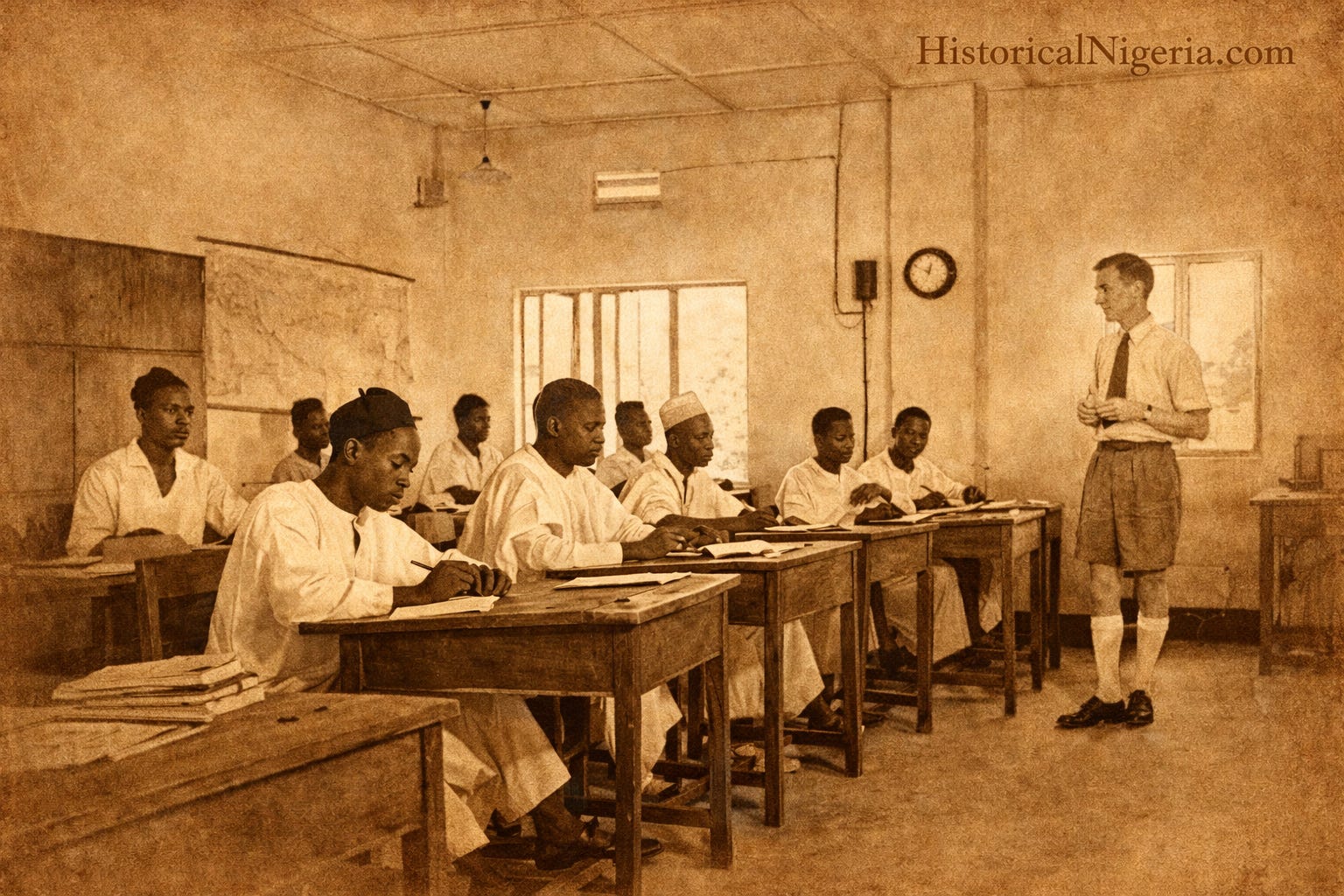
Women paid the heaviest price. Cultural expectations confined them to the household. In the north, conservative traditions restricted girls’ movement and schooling. In the south, early marriage pulled girls out before adolescence. Everywhere, educating a girl was widely considered wasteful — she would marry into another family, and her learning would benefit strangers. School fees blocked the poor further, while mission schools were unacceptable to many Muslim families.
The consequences were lasting. Women without education could not access formal employment, read legal documents, or participate in governance. Communities with low female literacy had higher child mortality, lower productivity, and weaker civic life, making what families treated as a private choice a national catastrophe still felt today.
HOW THE RIGHT TO EDUCATION EMERGED
Change came gradually, driven by internal advocacy and international pressure. The 1948 Universal Declaration of Human Rights established education as a universal right. Nigeria’s ratification of the Convention on the Rights of the Child and CEDAW created binding legal obligations requiring non-discriminatory access.
Inside Nigeria, women’s organisations, civil society groups, and teachers’ unions pushed governments toward inclusive schooling, while bodies like UNICEF and UNESCO added financial and political momentum. Economics also played a role — research showed that educating girls is among the highest-return investments a developing country can make, lowering fertility rates, improving child health, and growing the workforce.
By the time Nigeria’s 1999 Constitution was adopted and the Universal Basic Education Act was passed in 2004, the principle of education as a right had been embedded in Nigerian law.
WHAT THE LAW SAYS TODAY
Nigeria’s legal framework rests on two pillars: the 1999 Constitution and the Universal Basic Education (UBE) Act of 2004.
Section 18 of the Constitution directs the government to ensure equal and adequate educational opportunities at all levels. However, this falls under Chapter II — Directive Principles of State Policy — rather than Chapter IV, which contains enforceable fundamental rights. A citizen cannot directly sue the government for failing to provide education the way they could sue over unlawful detention, a weakness legal scholars have long criticised.
The UBE Act is more concrete. It mandates free, compulsory education for nine years — covering primary and junior secondary school — prohibits tuition fees at these levels, and established the Universal Basic Education Commission (UBEC) with a federal-state funding mechanism. “Free,” however, has limits. The Act removes tuition but not the cost of uniforms, materials, or transportation, which remain real barriers for the poorest families. Beyond junior secondary school, the legal guarantee largely disappears — senior secondary and higher education carry no comparable universal right.
WHAT THIS RIGHT COVERS — AND WHAT IT DOESN’T
The right to education in Nigeria primarily guarantees access — the opportunity to attend school — but says little about what happens once a child is inside. Quality is not guaranteed. A child in a crumbling classroom without textbooks and an undertrained teacher is technically exercising their right, but whether that amounts to a meaningful education is another matter.
Teacher shortages, collapsed infrastructure, and absent learning materials are widespread in public schools. In conflict-affected areas, particularly the Northeast, schools have been burned and occupied, displacing millions from education entirely. Children with disabilities face schools with no accommodations. Poverty drives child labour. For girls, safety concerns, long distances, and cultural pressure around early marriage interrupt schooling even where the law formally protects it.
Access is not the same as opportunity.
THE GAP BETWEEN LAW AND REALITY
Over ten million Nigerian children are out of school — one of the highest figures in the world. The pattern reflects structural inequalities built over generations: insufficient schools, unaffordable informal costs, conflict, poverty, and cultures that still do not fully value girls’ education. In some northern states, fewer than half of school-age girls attend school at all.
The Boko Haram insurgency made things dramatically worse, destroying hundreds of schools in the Northeast, driving out teachers, and frightening parents into withdrawing their children. The group’s very name — loosely meaning “Western education is forbidden” — reflects an ideology that found traction partly because prior government failures had already eroded trust in the school system.
The cost of this deprivation is not borne by individuals alone. A society where millions are denied education cannot sustain meaningful democracy, build a productive economy, or develop an informed citizenry. Literacy is the prerequisite for understanding a ballot. Critical thinking, which education builds, is what democracy runs on. When millions are excluded from learning, the entire country pays — in weaker institutions, lower growth, and a democracy that cannot be fully exercised by all its people.
The World Bank’s Human Capital Index, which measures the productivity of future generations relative to a benchmark of full health and education, ranks Nigeria poorly precisely because of these gaps.
A RIGHT WORTH DEMANDING
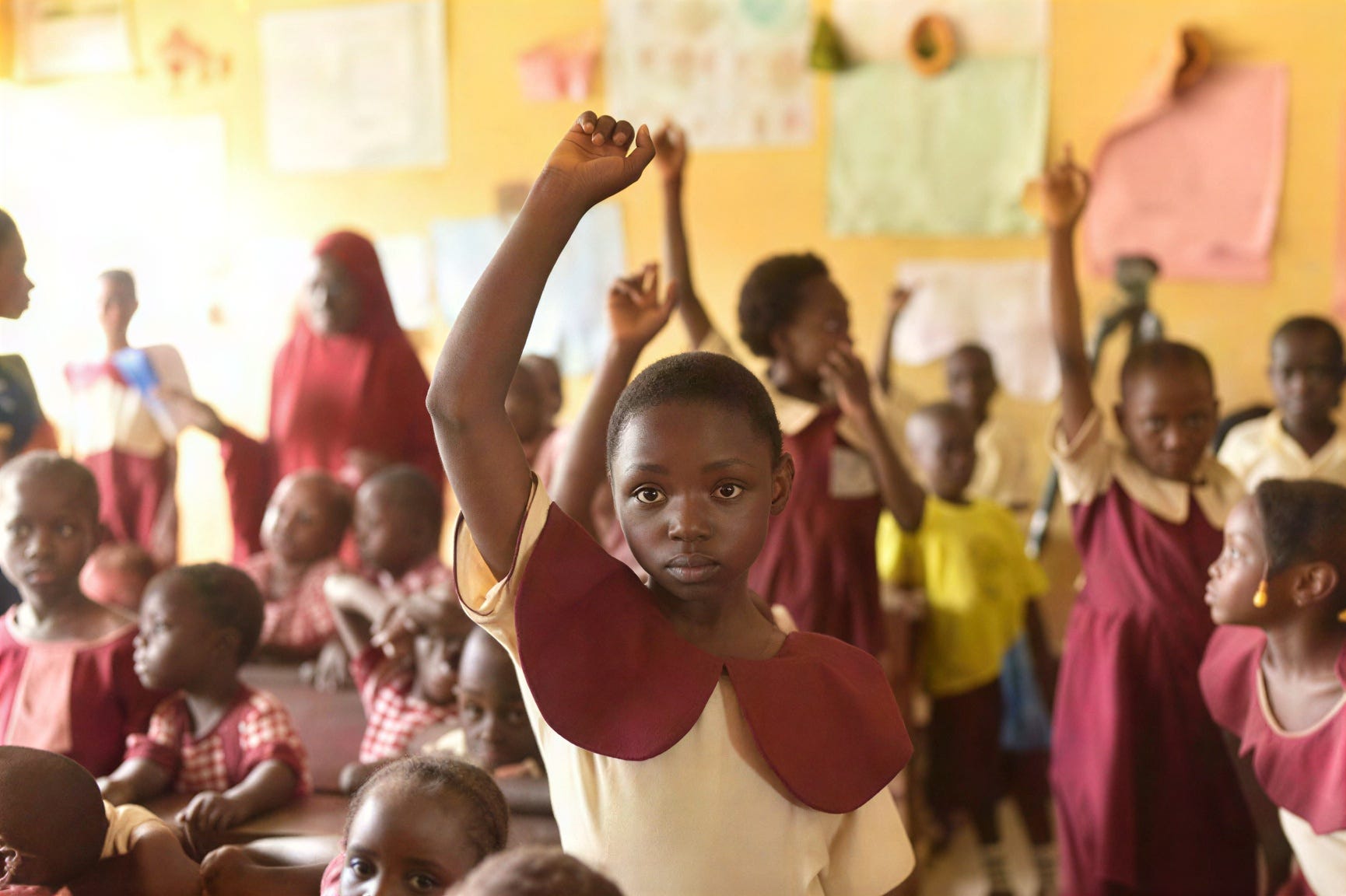
The right to education in Nigeria is not a gift. It is an obligation the state owes every child and every person on Nigerian soil, won through generations of struggle by those who refused to accept exclusion.
Citizens must go beyond accepting whatever schooling the government provides. Parents can demand accountability for how UBE funds are used — UBEC publishes annual reports that civil society can scrutinise.
Communities can organise around enrolment, advocate for girls’ participation, and challenge norms that keep children out of school. Organisations working on education access in Nigeria that citizens can engage with or support include Camfed Nigeria, the Education as a Vaccine Foundation, and the Malala Fund’s Nigeria programme. Civil society and journalists can use the UBE Act, the Constitution, and international treaties to press governments at every level.
Knowing your rights is the first step to demanding them. Education is not a privilege to be grateful for — it is an entitlement to be claimed.
Found this helpful,
The right to learn belongs to everyone. Defend it. Demand it. Pass it on.