

They Were the Storm
The Story of Nigeria's Early Women in Politics

Before Nigeria had a flag, before independence speeches were written, and long before the word “politician” was associated with women in public life — Nigerian women were already in the streets, in the meeting halls, shaping the political landscape, challenging colonial authority, and at the centre of some of the country’s most consequential political moments some of which paved way for mordern democratic practices. Their names are not attached to national holidays. Their portraits do not always hang in government buildings. But the story of Nigerian politics is incomplete without them.
This is the story of the women who came first.
The Women’s War of 1929 — When Women Moved the Colonial Machine
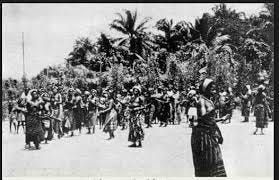
Before we discuss individual women, we must discuss a collective act that changed Nigerian political history. In November 1929, tens of thousands of women across the Eastern Region rose up in what became known as the Women’s War — or Ogu Umunwanyi in Igbo. The trigger was a rumour that the British colonial government intended to tax women, but the protest quickly became a broad uprising against the entire colonial system.
Women from Aba, Owerri, Calabar, and surrounding areas dressed in palm fronds and sang, danced, and demonstrated outside the homes of colonial warrant chiefs and government offices. They demanded the removal of warrant chiefs, the release of prisoners, and an end to taxation of women. Colonial authorities responded with lethal force — troops opened fire on protesters at Opobo and Calabar, killing at least 50 women and wounding many more.
The Women’s War did not overthrow colonial rule. But it deeply unsettled it. Subsequent British investigations led to reforms in the colonial administrative system. More importantly, it planted the seed of an organised, fearless female political consciousness in southeastern Nigeria that would shape the generation of activists and politicians who came after.
THE 1940s–1950s: THE AGE OF THE ACTIVIST
Funmilayo Ransome-Kuti — The Mother of Nigerian Activism
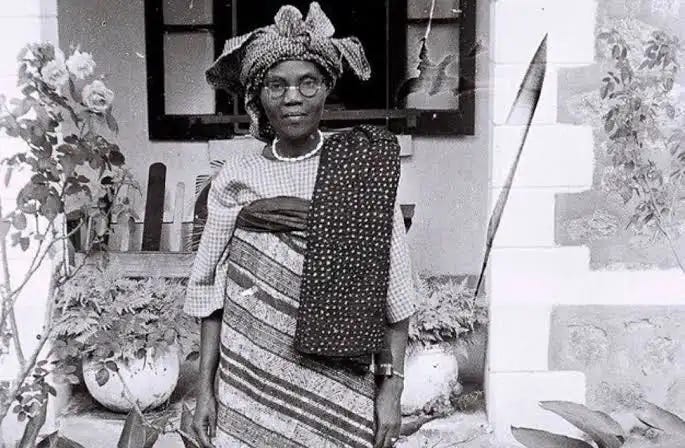
If there is one woman whose life captures what it means to be politically fearless in colonial Nigeria, it is Funmilayo Ransome-Kuti. Born in 1900 in Abeokuta, Ogun State, she was a teacher, a union organiser, and a nationalist — long before any of those words had room for a woman.
In the 1940s, she founded and led the Abeokuta Women’s Union (AWU), a grassroots organisation that mobilised tens of thousands of market women to protest colonial taxation policies they considered unjust, popularly known as the Abeokuta Women’s Revolt or the Egba Women's Tax Riot. The protests were not symbolic. In 1949, she led a sustained campaign that forced the Alake of Abeokuta — a traditional ruler backed by British colonial authority — to abdicate his throne temporarily. This was an extraordinary act of political power, organised by women who had never held a formal office.


Ransome-Kuti also holds the distinction of being the first woman in Nigeria to drive a car — a small but symbolic act in a society where women’s mobility, both literal and figurative, was deeply restricted. She was a founding member of the Women’s International Democratic Federation, and she travelled internationally to advocate for Nigerian women’s rights at a time when most Nigerian women had never left their home state.
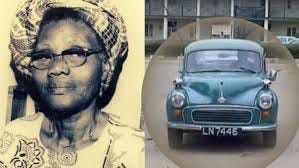
She died in 1978 after being thrown from a window during a military raid on her son Fela Kuti’s compound.
Margaret Ekpo — The Woman Who Ran for Office
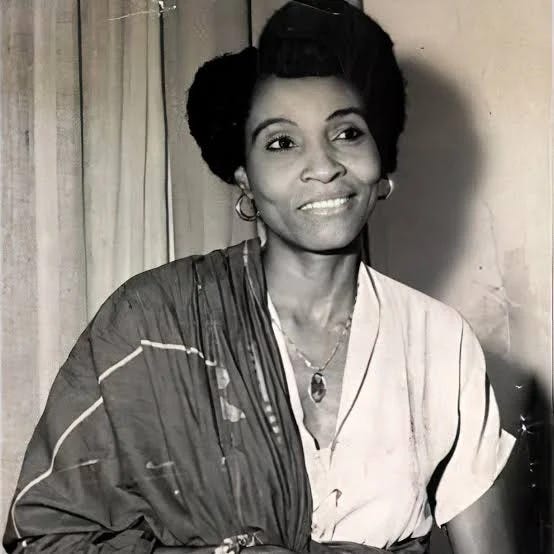
While Ransome-Kuti was fighting battles in the streets of Abeokuta, Margaret Ekpo was doing something equally radical in the Eastern Region — she was running for political office.
Born in 1914, Ekpo was a community organiser who built her political base through women’s groups and nationalist movements across the Eastern Region. She was one of the earliest Nigerian women to formally enter electoral politics, and in 1954, she was elected to the Eastern House of Assembly — a remarkable achievement in a society where women had only recently been granted the right to vote in parts of the country.
Ekpo’s political work drew directly from the legacy of the Women’s War of 1929 — known in Igbo as Ogu Umunwanyi — in which tens of thousands of women in southeastern Nigeria rose up against British colonial taxation in a mass protest that colonial authorities suppressed with lethal force. That uprising planted the seeds of a political consciousness among Eastern Nigerian women that figures like Ekpo would later channel into formal politics.
Hajiya Gambo Sawaba — The Most Arrested Woman in Nigerian History
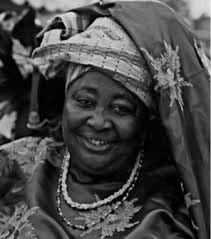
Sixteen arrests. Beatings. Detention. Children lost while she was imprisoned. None of it stopped her.
Born Ramatu Gambo in 1933 in Zarewa, Kano State, Hajiya Gambo Sawaba entered politics in a part of Nigeria where the barriers were not just institutional — they were cultural, religious, and enforced by force. She joined the Northern Elements Progressive Union (NEPU), campaigned for women’s right to vote and to be educated, and refused to be invisible at a time when northern women were largely confined to purdah and excluded entirely from civic life.
She contested elections she was structurally designed to lose. She kept contesting. Women in northern Nigeria were not even granted the vote in regional elections until 1979 — yet Sawaba had been fighting for that right for decades before it arrived.
THE 1960s–1970s: INDEPENDENCE AND INVISIBLE WOMEN
Nigeria gained independence on October 1, 1960. The celebrations were loud. The speeches were hopeful. But the political structures that emerged — the parties, the parliament, the executive — were overwhelmingly male. The women who had fought for that independence were largely sidelined from the formal institutions of the new nation.
A small number of women found their way into the First Republic’s legislative structures. Janet Akinrinade was among the pioneering women who served in parliamentary roles during this era, representing a generation of educated Nigerian women who quietly insisted on taking up public space even as the culture around them insisted they should not.
These years were defined more by what women were denied than what they were given. Military coups, civil war, and political instability between 1966 and 1979 suspended civilian governance entirely — and with it, whatever limited formal political representation women had managed to secure. The Women’s War had been forgotten. The female parliamentarians of the 1950s were becoming a fading memory.
But underneath the surface, something was building.
THE 1980s–1999: SLOW PROGRESS, DELIBERATE PRESENCE
The return to civilian rule in 1979 under the Second Republic brought with it a renewed — if still limited — space for women in politics. Women began contesting elections at the state and federal levels in larger numbers, though they rarely won in significant proportions. The barriers were structural: party gatekeeping, lack of campaign finance, cultural expectations, and outright hostility from male-dominated political machines.
Through the 1980s and into the 1990s, women continued to chip away at these barriers. Many served in appointed government positions — as commissioners, ministers, and advisers — rather than through elected office. These roles, while not subject to the democratic process, gave women experience in governance and visibility in public life.
The long years of military rule between 1983 and 1999 were paradoxical for Nigerian women in politics. On one hand, military governments appointed women to cabinet positions, creating visibility. On the other hand, the absence of democratic elections removed the very arena in which women could build genuine political power through votes, campaigns, and mandates from the people.
THE 2000s: FIRSTS THAT SHOULD NOT HAVE BEEN FIRSTS
Virgy Etiaba — Nigeria’s First Female Governor
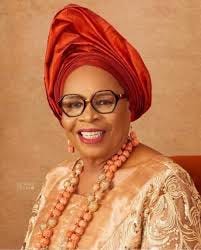
In November 2006, something happened in Nigerian political history that had never happened before: a woman became the Governor of a Nigerian state.
Her name was Virginia “Virgy” Etiaba, and she became Acting Governor of Anambra State after Governor Peter Obi was impeached by the state House of Assembly. Etiaba, who had been serving as Deputy Governor, stepped into the role, making history simply by doing her constitutional duty.
Her tenure lasted only a few months before the courts reinstated Peter Obi. But the milestone was real, and it was historic. For the first time, a Nigerian woman had held executive authority over a state. The fact that it took until 2006 — 46 years after independence — said everything about how slowly the doors of executive power had been opening for Nigerian women.
Since Etiaba, no woman has been elected Governor of any Nigerian state. That statistic stands today, nearly two decades later.
Ngozi Okonjo-Iweala — From Abuja to the World Stage
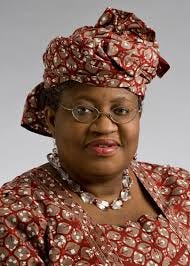
No account of Nigerian women in politics and public service is complete without Ngozi Okonjo-Iweala. An economist by training and a technocrat by career, she served as Nigeria’s Finance Minister twice — under President Olusegun Obasanjo from 2003 to 2006, and again under President Goodluck Jonathan from 2011 to 2015.
During her tenures, she became the public face of Nigeria’s economic reform agenda, pushing for debt relief, transparency, and fiscal discipline in an environment notorious for opacity. She became Nigeria’s most internationally recognised female figure in governance — a woman who navigated both the complexities of Nigerian politics and the expectations of global financial institutions.
In 2021, Okonjo-Iweala made history again — this time on the global stage. She was appointed Director-General of the World Trade Organisation (WTO), becoming the first woman and the first African to hold the position. It was a moment that transcended Nigerian politics and landed squarely in the category of world history.
WHAT THEIR STORIES TELL US
Across eight decades, the thread running through each of these women’s stories is not just ambition — it is resistance. Every woman on this list had to fight harder than any of her male counterparts simply to be in the room. Funmilayo Ransome-Kuti built her own room. Margaret Ekpo knocked on doors that had never been opened for a woman. Virgy Etiaba walked through a door that opened by accident and made the most of it. Ngozi Okonjo-Iweala walked through doors that many men had tried to close.
Their legacies are not simply about gender. They are about what Nigeria loses when it excludes half its population from power. They are about what becomes possible when women are allowed — or simply refuse not — to lead.
Nigeria has produced extraordinary women in politics. The question the country must now answer — the question that Story 2 of this series will take on — is why, in 2026, extraordinary is still the exception rather than the rule.
Found this helpful,